



A CULTURE THAT IS LIVED, RESPECTED, AND SHARED
Nepal is not just a destination, it is a way of feeling the world. Framed by the towering peaks of the Himalayas and shaped by centuries of history, this country offers much more than spectacular landscapes: it is a place where traditions are part of everyday life, where the spiritual and the earthly coexist naturally, and where every gesture carries deep meaning.
For those who take part in a volunteer experience in Nepal, approaching its traditions is not only interesting, but essential. It is the gateway to understanding its culture, its people, and its way of seeing life.
Do you have Nepal on your bucket list?
If the answer is NO, you should…
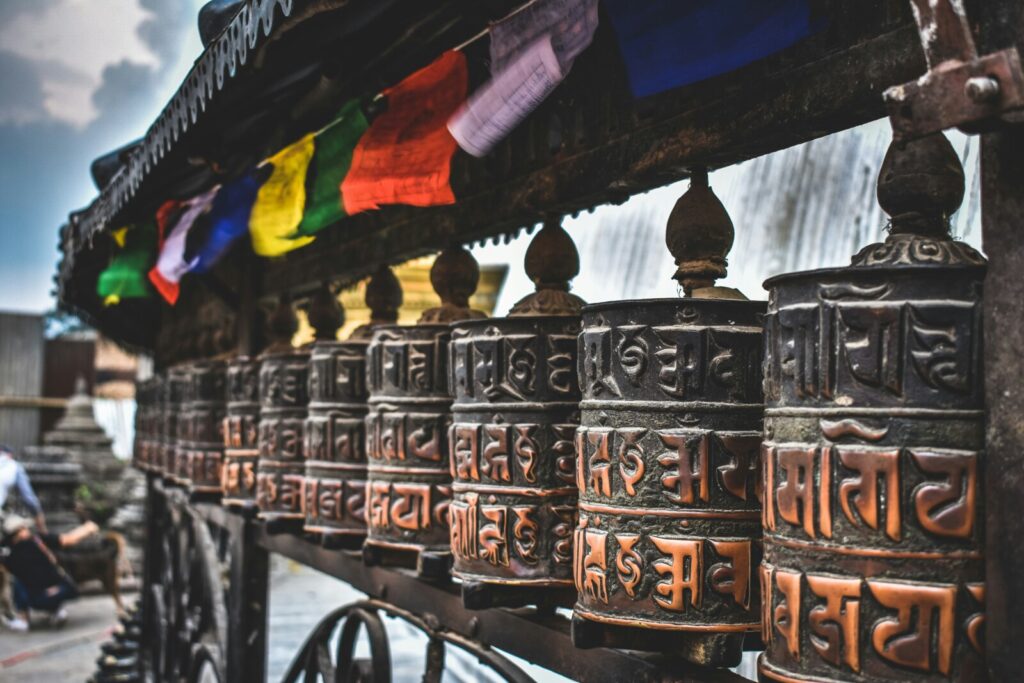
A SPIRITUALITY PRESENT IN EVERY CORNER
Nepal is one of the few countries in the world where Hinduism and Buddhism coexist so harmoniously. This spiritual duality is reflected in temples, stupas, rituals, and practices that are part of daily life. It is not unusual to come across people making offerings at dawn, lighting incense, or reciting mantras in the middle of the city.
One of the most visible rituals is the puja, an offering ceremony that can take place at home or in temples. Through flowers, food, candles, and incense, people express gratitude, ask for protection, or celebrate important moments in their lives. For a volunteer, witnessing or even participating in a puja can be a deeply transformative experience.
FESTIVALS THAT FILL THE COUNTRY WITH LIFE
If there is something that defines Nepali culture, it is its festivals. Throughout the year, the calendar is full of celebrations that combine religion, family, and community.
One of the most important is Dashain, a celebration that can last up to fifteen days and marks the victory of good over evil. During this time, families gather, rituals are performed, younger members are blessed, and family bonds are strengthened.
Another important festival is Tihar, also known as the festival of lights. Over several days, homage is paid not only to the gods but also to animals such as crows, dogs, and cows, recognizing their importance in daily life. Homes are illuminated with candles and decorations, creating a magical and meaningful atmosphere.
These festivals are not shows for tourists, but deeply lived moments for the local population. Being part of them allows you to understand the value placed on family, community, and tradition.
THE IMPORTANCE OF FAMILY AND COMMUNITY
In Nepal, family is the central core of life. Several generations often live under the same roof, sharing responsibilities, celebrations, and important decisions. Respect for elders is fundamental, and relationships are marked by closeness and mutual support.
For volunteers, this community dimension is especially meaningful. It is common to quickly feel integrated, invited to share meals, conversations, and everyday moments. These small experiences are often the ones that leave the deepest mark.
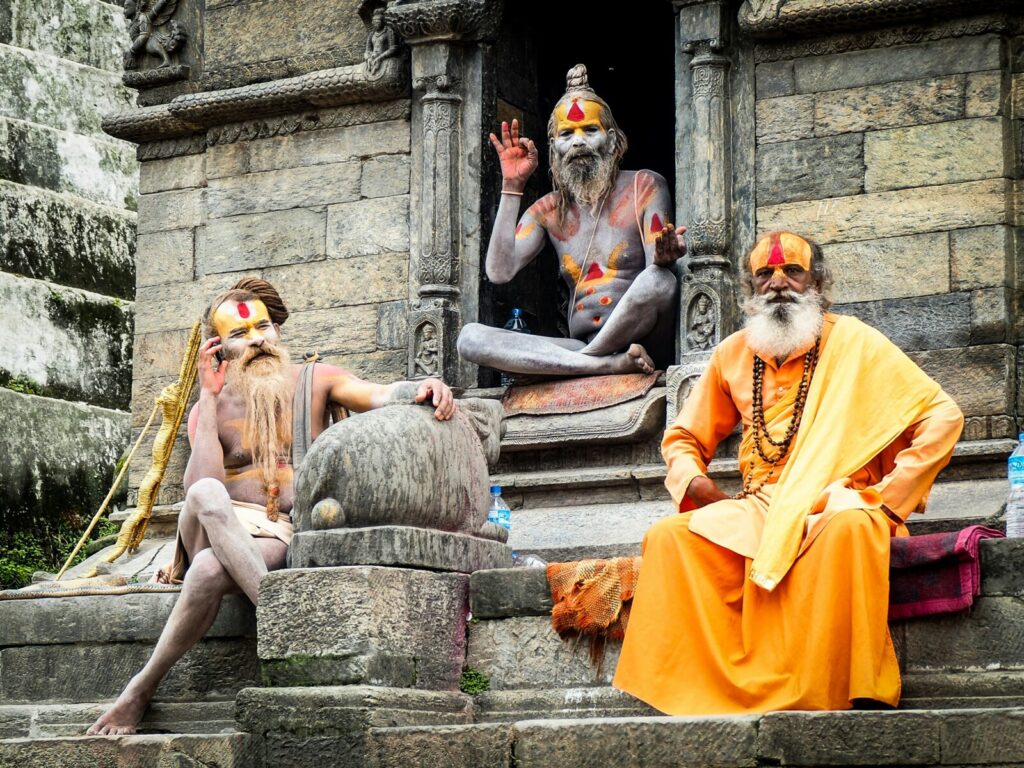
EVERYDAY GESTURES FULL OF MEANING
Nepali traditions are also reflected in the simplest details of daily life. The traditional greeting, Namaste, is not just a way of saying hello, but a gesture of respect that acknowledges the sacred in the other person. It is accompanied by hands pressed together at chest level and a slight bow of the head.
It is also important to use the right hand to give and receive objects, as the left is considered impure in many contexts. Removing shoes before entering a home or certain spaces is another deeply rooted sign of respect.
These small gestures, although simple, hold great cultural value. Adapting to them not only makes coexistence easier, but also shows a respectful and open attitude toward the local culture.
A GASTRONOMY THAT TELLS STORIES
Food in Nepal is much more than nourishment: it is a cultural expression. The most representative dish is dal bhat, a combination of rice, lentils, and vegetables that is eaten daily in many households. Simple yet nutritious, it reflects the essence of Nepali life: balance, humility, and connection to the land.
Sharing a meal is also a social act. Sitting on the floor, eating with your hands, and doing so in company are common practices that strengthen bonds and create spaces for real connection.
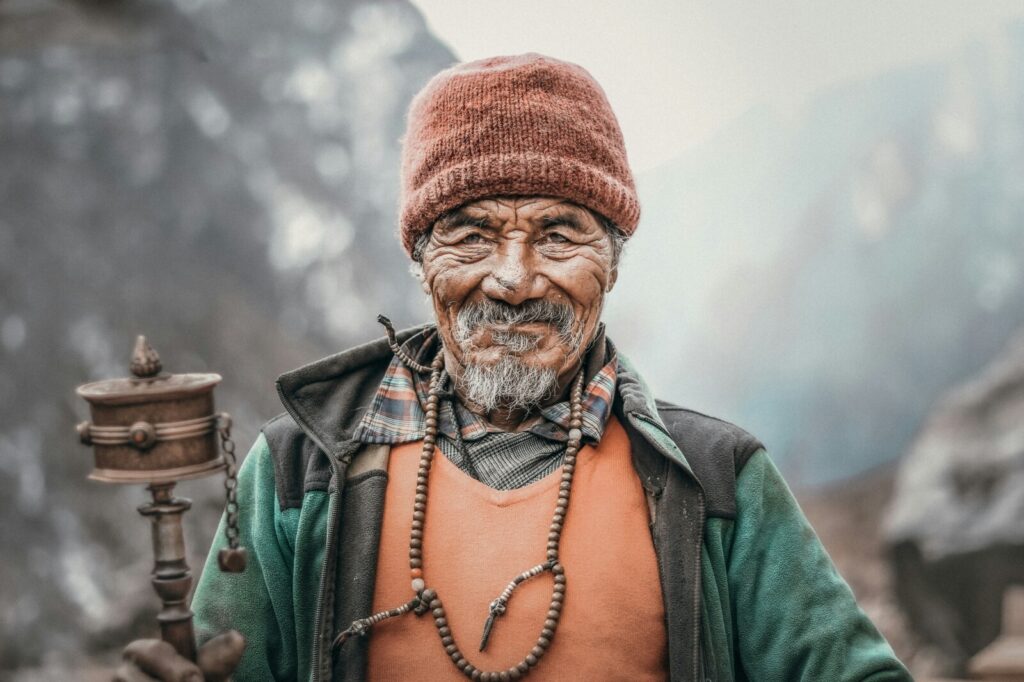
TRADITIONS THAT TRANSFORM THE EXPERIENCE
Living in Nepal means adapting to a different rhythm, where time seems to have another meaning and where priorities focus more on human connection than on material things. For those who arrive from abroad, this can represent a profound shift in perspective.
Nepali traditions do not seek to impress, but to transmit. They are an invitation to observe, to learn, and to become part of something that goes beyond oneself. In the context of volunteering, understanding and respecting these traditions not only enriches the experience, but turns it into something far more authentic and meaningful.
Because in the end, Nepal is not remembered only for what you see, but for everything you feel. And its traditions are, without a doubt, the soul of that experience.