



WHEN CULTURE IS LIVED IN EVERY GESTURE, EVERY OFFERING, AND EVERY DAY
To talk about Bali is to talk about much more than paradise landscapes or endless beaches. On this island in Indonesia, culture is not a complement to the journey: it is the heart that sustains everything. Balinese traditions are deeply integrated into daily life, setting the rhythm of the days, relationships between people, and the connection with the spiritual. For those who experience volunteering here, understanding these traditions not only enriches the journey, but completely transforms the way of seeing the world.
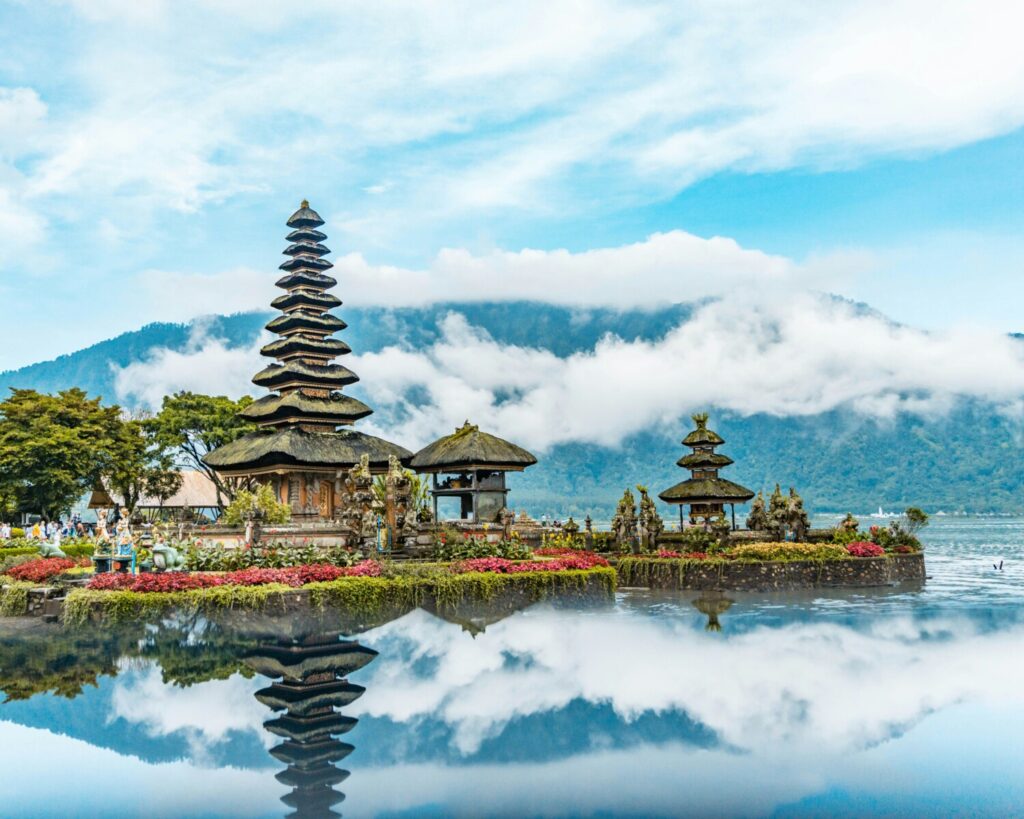
One of the first things that catches your attention upon arriving in Bali is the offerings. Known as canang sari, small handmade baskets made from palm leaves, flowers, rice, and incense are placed daily in temples, homes, shops, and even on sidewalks. At first glance they may seem like a decorative detail, but in reality they are a constant manifestation of gratitude and balance. Each element has a meaning, each color represents a deity, and each gesture when placing them is part of a conscious act. What is most surprising is their frequency: it is not something occasional, but a daily ritual repeated several times a day, reminding us that the spiritual is not separate from the everyday.
This constant connection with the spiritual is based on a key principle in Balinese philosophy: Tri Hita Karana, which means “the three causes of well-being.” This concept seeks balance between humans, nature, and the divine. It is not an abstract idea, but a practical guide reflected in the way of living, building, relating, and understanding the environment. From the layout of houses to the organization of villages, everything responds to this search for harmony.
Balinese Hinduism, deeply rooted on the island, is also one of the pillars of its traditions. Unlike the Hinduism practiced in India, in Bali it blends with animist beliefs and local traditions, creating a unique spirituality. Temples —known as pura— are present in every corner: there are family, community, and regional temples. Each has its own importance and calendar of ceremonies. For volunteers, it is not uncommon to be invited to participate in or witness rituals that, far from being spectacles, are deeply meaningful moments for the community.
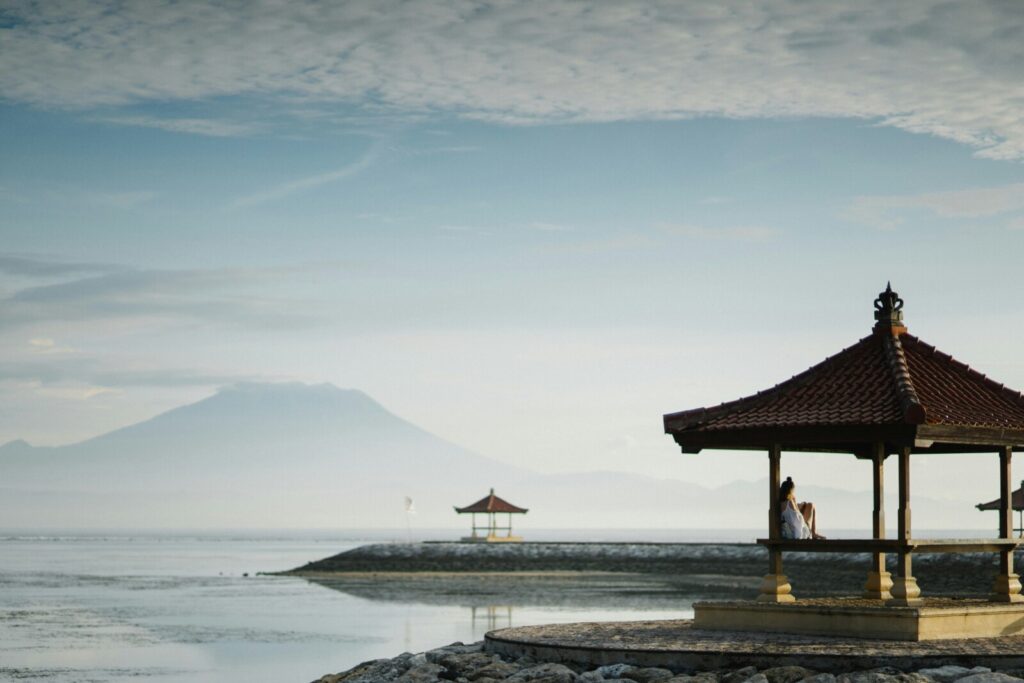
The Balinese calendar is another fascinating element. In fact, two calendars coexist: the pawukon (210 days) and the lunar calendar. This gives rise to a large number of festivities throughout the year. Among them, one of the most impactful is Nyepi, the Day of Silence. But before this day, there is a celebration full of energy and symbolism: the parade of the ogoh-ogoh, enormous demonic figures built by the youth of each community. These figures represent negative energies and are carried through the streets in a festive atmosphere, with music and collective participation. At the end, many of them are burned, symbolizing purification.
And then Nyepi arrives. For 24 hours, the entire island comes to a complete stop. The airport closes, the streets are empty, there are no lights, no noise, no activity. It is a day dedicated to introspection, silence, and total disconnection. Even those who do not practice the religion must respect it. For many volunteers, this day becomes one of the most transformative experiences of their stay, a forced pause that invites you to look inward in a world that rarely stops.
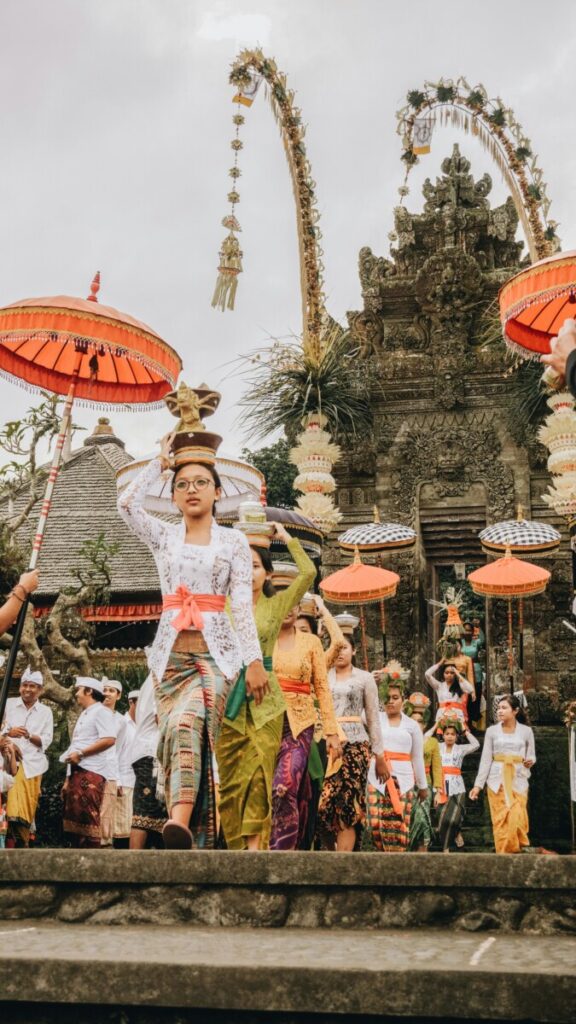
Another key festivity is Galungan, which celebrates the victory of good over evil. During these days, the streets are filled with penjor, long bamboo poles decorated with leaves, flowers, and offerings placed in front of each house. The image is spectacular and full of symbolism. Ten days later, Kuningan is celebrated, marking the end of this festive period. These celebrations not only have a religious meaning, but also reinforce the sense of community and belonging.
And if there is something that defines Bali, it is its strong community fabric. The banjar, the traditional social organization, is the core of local life. Each person belongs to a banjar and actively participates in the life of the group: from ceremonies to important decisions or everyday activities. This system promotes values such as cooperation, respect, and shared responsibility. For those who take part in volunteer projects, integrating —even partially— into this dynamic allows them to understand a much more collective way of life than many are used to.
Traditions are also expressed through art, which in Bali is not understood as something separate from daily life. Balinese dance, for example, is a way of telling sacred and mythological stories. Every movement, every hand gesture, every facial expression has a meaning. Dances such as Legong, Barong, or Kecak are not only performances, but rituals full of symbolism. Traditional music, especially the gamelan, accompanies these dances, creating a unique atmosphere that surrounds the viewer.
Craftsmanship is another reflection of this cultural richness. Wood carving, stone sculpture, painting, and the creation of traditional textiles are part of daily life in many villages. Beyond their aesthetic value, these practices have a spiritual and cultural component that is passed down from generation to generation.
As for clothing, the use of the sarong and sash is essential during ceremonies and visits to temples. It is not only a matter of etiquette, but a sign of respect toward the sacred. Learning how to dress appropriately and understanding when to do so is part of the adaptation process for anyone spending time on the island.
It is also important to understand the unwritten rules that are part of Balinese culture. Gestures such as not touching another person’s head, using the right hand to give or receive objects, or maintaining a respectful attitude in sacred spaces are small details that make a big difference. For volunteers, paying attention to these aspects demonstrates cultural sensitivity and facilitates a more authentic integration.
But beyond ceremonies, rituals, or rules, what truly makes Bali special is the way these traditions are integrated into everyday life. They are not isolated events, but a constant way of being in the world. In the smile of those who greet you, in the calm with which they face daily life, in the importance they give to community and spirituality, there is a lesson that goes far beyond the journey.
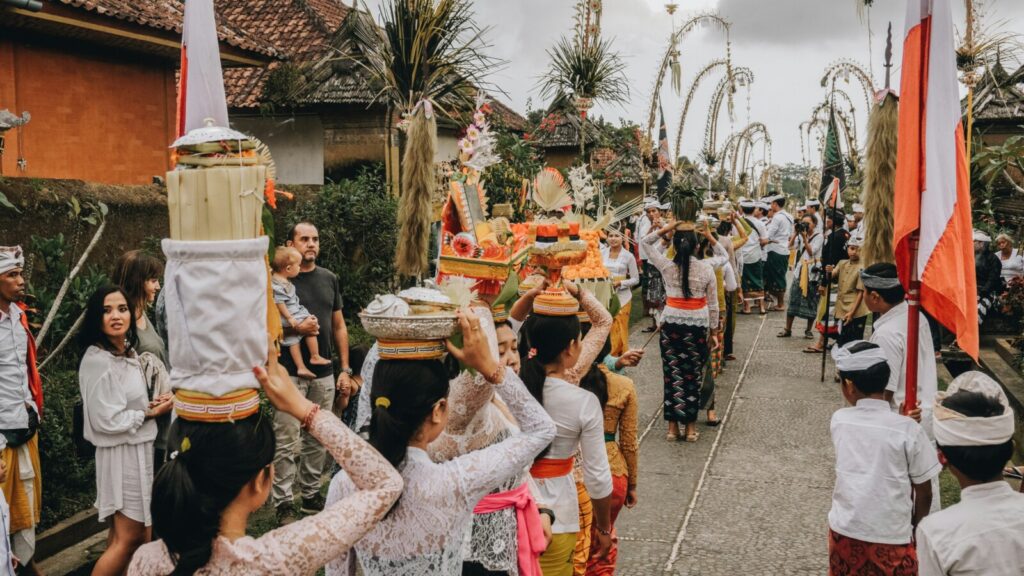
For those who live a volunteering experience in Bali, these traditions are not only observed: they are felt, lived, and, in a way, incorporated. It is a process that invites you to question the rush, the disconnection, and the way we understand success or well-being in our own cultures.
Because in the end, Bali is not just a destination. It is a way of understanding life. And its traditions, far from being something of the past, are more alive than ever, reminding us that balance, community, and connection with what truly matters are still possible.