



What you discover when you live a volunteer experience
Asia is an immense continent, diverse and full of contrasts. However, we often imagine it based on simplified ideas that we have heard for years: images repeated in movies, comments circulating on social media, or assumptions born from a lack of knowledge.
When someone decides to live an international volunteer experience, many of those ideas arrive in their suitcase.
And the curious thing is that, as soon as you begin to live alongside the community, many of them begin to fall apart almost without you noticing.
Travel already opens the mind, but volunteering goes one step further: it allows you to become part of daily life, observe the local reality up close, and understand nuances that are difficult to perceive from the outside.
That is why today we want to talk about some of the most common myths about Asia… and what volunteers actually discover when they arrive there.
Myth 1: “Asia is all the same”
One of the most common mistakes is to think of Asia as if it were a homogeneous reality.
But in fact we are talking about the largest and most populated continent on the planet, with thousands of cultures, languages, religions and completely different ways of life.
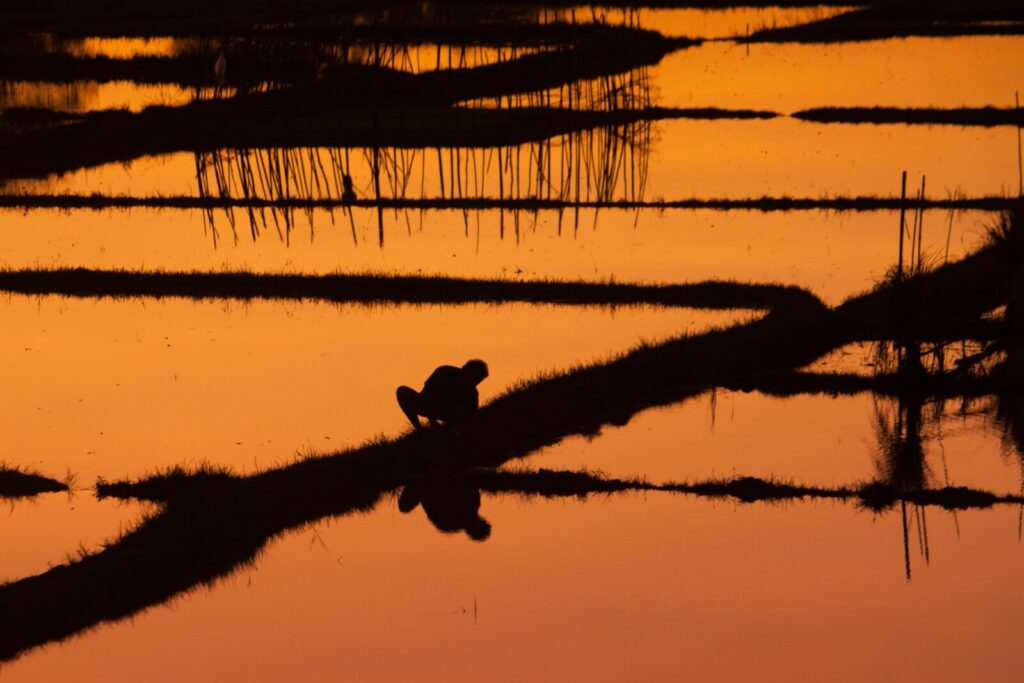
Life on a tropical island like Siargao, in the Philippines, is completely different from the rhythm of cities like Bangkok, or from the rural areas of Sri Lanka.
When a person arrives at their volunteer project, they discover that each place has its own identity. The food changes, traditions change, the way people relate to each other changes… and that is precisely where the richness of the experience lies.
Volunteering allows you to go beyond the label “Asia” and begin to understand countries and communities for what they truly are.
Myth 2: “There is always extreme poverty”
Another widespread myth is the idea that all of Asia lives in extreme poverty. While it is true that there are communities with significant needs, there are also growing economies, expanding middle classes and highly developed cities.
Volunteering is not about “arriving to save”, but about collaborating with local projects that are already working from within the community.
When volunteers arrive, they discover something fundamental: the people they work with are not defined by their shortcomings, but by their capacity for organization, their resilience and their strong sense of community.
Very often, what surprises participants the most is the positive energy, hospitality and collective strength that exist in places where, from the outside, people expected to find only difficulties.

Myth 3: “The cultural barrier is impossible to overcome”
Before traveling, many people worry about cultural differences or the language barrier. How will I communicate? How will I know if I am doing things correctly?
The reality is that daily coexistence creates bridges much faster than we imagine.
In many projects, English works as a common language, but even when words are not enough, other forms of communication appear: gestures, laughter, shared work, playing with children or spontaneous conversations during a meal.
Volunteers discover that culture is not an impossible barrier, but a constant opportunity to learn and adapt.
And precisely that process — listening, observing and understanding — is one of the most enriching parts of international volunteering.
Myth 4: “Volunteers always teach”
Another frequent myth is the idea that the volunteer arrives with all the knowledge and the local community is simply the one receiving help.
But those who have lived the experience know that the reality is much more balanced.
Yes, volunteers contribute their time, energy and skills. But at the same time they receive constant lessons about different ways of life, about cooperation, about adaptation and about seeing the world from other perspectives.
Many people return from their experience saying something similar: “I thought I was going to teach… and I ended up learning far more than I ever imagined.”
Myth 5: “The impact is small”
Sometimes people think that international volunteering does not have a real impact or that the contribution of one person for a few weeks cannot make any difference.
But when projects are well structured and work hand in hand with the community, every person adds value.
A volunteer can support educational activities, collaborate in community programs, help reinforce environmental initiatives or simply bring new ideas and motivation to the local team.
Impact is not always measured through immediate big changes. Very often it lies in the small day-to-day progress, in the continuity of projects and in the human connections that are created.
When the experience breaks stereotypes
Perhaps one of the greatest lessons of volunteering is realizing how limited our knowledge can be when we only see the world from a distance.
Stereotypes begin to disappear when you share a meal with a local family, when you participate in a neighborhood celebration or when you start recognizing the faces of the people who become part of your daily routine.
At that moment, Asia stops being an abstract idea and becomes a collection of real stories, people and experiences.
And very often, when volunteers return home, they realize something important: the journey has not only allowed them to discover another part of the world. It has also helped them question their own certainties and look at reality with more curiosity, respect and openness.
Because in the end, dismantling myths does not only change the way we see a continent.
It also changes the way we understand the world.