


What does a community development program really mean?
When we talk about international volunteering, we often think about specific actions: teaching in a school, supporting a community center, collaborating on environmental projects, or accompanying a community in their daily life.
But behind each activity there is something much deeper: a community development program.
And understanding what it truly means is key to understanding the impact —real and sustainable— of a volunteer experience.
Beyond occasional help
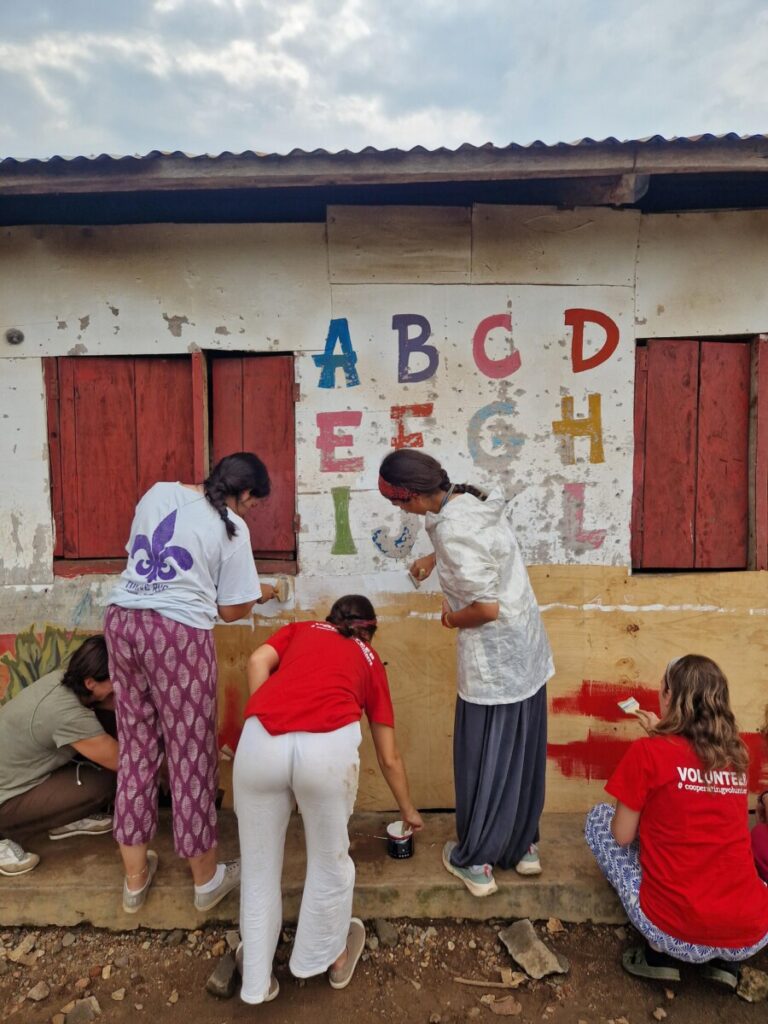
A community development program is not an isolated action or a temporary intervention. It does not consist of “going to help” for a few weeks and then leaving.
It is a continuous process, built together with the community, that seeks to strengthen its own capacities to generate long-term change. And that is the main objective at Cooperating Volunteers, to ensure that each project is self-sufficient so that it can endure over time.
Community development starts from an essential idea:
Communities do not need to be saved, they need opportunities, resources and support to enhance what already exists within them.
That is why projects are structured as follows:
- We work with local leaders.
- We listen to the real needs of the environment.
- We adapt to the cultural context.
- They set medium and long-term objectives.
- We constantly evaluate the impact.
The volunteer experience, then, is not the center of the project.
The community is.
A process that is built over time
Community development requires patience. It is not immediate, it is not visible in a single photograph, it is not measured in days.
It is built step by step: improving education, strengthening the self-esteem of boys and girls, creating support networks among women, promoting environmental sustainability, generating safe spaces.
Each small step forward is part of a bigger transformation.
At Cooperating Volunteers, programs do not arise from improvisation. They are born from local partnerships, from years of work on the ground and from the conviction that sustainable change only happens when the community is the sole protagonist.
And where does volunteering fit in?
This is where the experience takes on its full meaning.
Volunteering does not replace local work. It complements it, supports it, drives it forward.
A participant does not arrive to “do more than anyone else,” but to contribute with respect, humility and collaboration.
Your role may be:
- Contribute energy and motivation.
- Share knowledge.
- Generate cultural exchanges.
- Give international visibility to the project.
- Support tasks that reinforce the work of the local team.
But the greatest value of the person who carries it out is not always technical. Many times it is human.
The constant presence, the support, the active listening and the bond that is created have a deep impact on communities, especially on children and young people.
The impact on the community
When a community development program is well structured, the impact does not depend on a single person.
It depends on continuity, coordination and a clear vision.
Over time, the results can be seen in:
- Better educational opportunities.
- Greater access to basic resources.
- Development of local skills.
- Community empowerment.
- Greater autonomy and resilience.
And something very important: in the building of trust.
Communities that feel that the support is constant and respectful strengthen their capacity for organization and internal leadership.
The impact on the volunteer
But community development does not only transform those who receive support.
It profoundly transforms those who participate.
A volunteer experience within a structured program allows you to:
- Understand the social and cultural complexity of each context.
- Break stereotypes.
- Develop real empathy.
- Learn to work in an intercultural team.
- Discover the value of listening and humility.
Volunteering stops being a one-time experience and becomes an experience that changes the way you see the world.
Many volunteers return home with a new social awareness, greater responsibility and an emotional connection that remains over time.
Community development: a shared commitment
Talking about community development is talking about commitment.
Commitment from the organization.
Commitment from the local team.
Commitment from the community.
Commitment from the volunteer.
It is understanding that change is not imposed, it is built.
That it is not about doing for others, but about doing with others.
And that each volunteer experience is part of something bigger than a temporary stay: it is part of a collective process of growth.
When the impact goes beyond the experience
A well-designed community development program does not end when the volunteer returns to their country.
The impact continues in:
- The relationships created.
- The awareness generated.
- The global network that is built.
- The inspiration that is shared.
Because true development is not only material. It is human, emotional, social.
It is the sum of small actions sustained over time, and that is why our motto is “small actions for big changes”