



Typical Ghanaian dishes you can try during your volunteer experience
Travelling to Ghana does not only mean collaborating in social, educational or community projects. It also means opening yourself up to a new way of living, sharing and understanding the local culture from within. And one of the most authentic ways to do this is through its gastronomy.
Food in Ghana is much more than a daily necessity: it is tradition, family, community and hospitality. During your volunteer experience, trying the country’s typical dishes will be an essential part of the journey. Each meal can become an opportunity to share with the local community, discover new flavours and better understand daily life in the destination.
Ghana has a rich, varied cuisine full of personality. Its dishes are usually made with basic ingredients such as rice, corn, cassava, yam, plantain, peanuts, fish, chicken, meat, vegetables and spices. Recipes change depending on the region, but they all have something in common: they are tasty, filling and prepared with great care.
If you are thinking about volunteering in Ghana, these are some of the typical dishes you will be able to try during your stay.
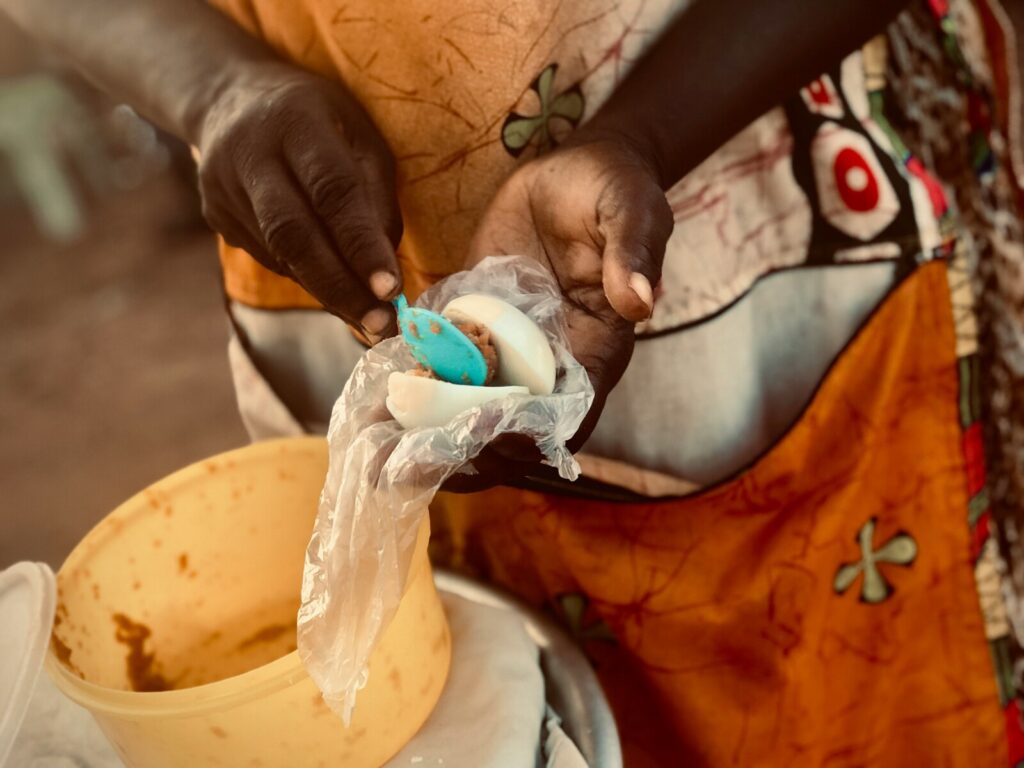
Jollof rice: Ghana’s star dish
One of the most famous dishes in Ghana, and probably in all of West Africa, is jollof rice. It is rice cooked with tomato, onion, spices and, in many cases, served with chicken, meat, fish or vegetables.
Jollof rice is a dish that is very present at celebrations, family gatherings, community meals and special events. Its reddish colour and intense flavour make it one of the favourite dishes for both locals and travellers.
In Ghana, jollof rice is almost a matter of national pride. There is a well-known culinary rivalry between several West African countries, especially Ghana and Nigeria, over who prepares the best jollof. During your volunteering experience, you will probably have the opportunity to try it and draw your own conclusions.
It is a perfect dish for those who are being introduced to local gastronomy for the first time, as its ingredients are usually familiar, but with a very characteristic touch of spices and flavour.
Waakye: rice, beans and lots of local flavour
Another very popular dish in Ghana is waakye, a combination of rice and beans cooked together. Although it may seem simple, it is one of the most complete and beloved dishes among the local population.
Waakye is usually served with different accompaniments: boiled egg, spaghetti, salad, fried plantain, meat, fish, spicy sauce or gari, a granulated flour made from cassava. It is a very common dish for breakfast or lunch, and it can easily be found in local food stalls, markets and traditional restaurants.
During your volunteer experience, trying waakye can be a good way to get closer to the everyday food of many Ghanaian families. It is nutritious, filling and very representative of the country’s urban and popular cuisine.
Banku: a traditional recipe with plenty of character
Banku is one of Ghana’s most traditional dishes. It is made from fermented corn and cassava dough, which is cooked until it reaches a soft, compact and slightly elastic texture.
It is normally served with soup, fish sauce, okra or tilapia. Its flavour is somewhat sour due to the fermentation process, so it may seem different at first, but it is an essential part of local gastronomy.
Banku is usually eaten with the hands, following traditional customs. A small portion is taken, shaped with the fingers and used to accompany the sauce or fish. For many volunteers, this moment can be a cultural experience in itself, as it allows you to learn not only about food, but also about customs, respect and ways of sharing.
Fufu: one of West Africa’s most emblematic dishes
Fufu is another of Ghana’s best-known dishes, as well as in other West African countries. It is normally prepared with cassava, plantain or yam, which are boiled and then pounded until they form a soft and elastic dough.
Fufu is usually served with traditional soups, such as groundnut soup, light soup or palm nut soup. Like banku, it is usually eaten with the hands, taking small portions to accompany the soup.
For volunteers, trying fufu can be a very special experience, as it is a dish deeply connected to family and community life. In many homes, preparing it requires time, strength and collaboration, which is why it also represents a form of unity between people.
Its texture may be new for those coming from Europe or Latin America, but that is precisely part of the learning process: stepping out of what is familiar, trying without prejudice and allowing yourself to be surprised by a different culture.
Red red: a simple, energetic and delicious dish
Red red is a very popular dish made with beans cooked in a sauce of tomato, onion, spices and palm oil. It is usually served with fried plantain, known as kelewele or simply fried plantain, depending on the preparation.
It is a very tasty dish, with a perfect combination between the intense flavour of the beans and the sweetness of the fried plantain. It is also a very good option for people who prefer meat-free meals, although it is always advisable to ask how it has been prepared.
Red red is a humble, nutritious and very common recipe in the Ghanaian diet. During your volunteering experience, it may become one of those dishes you try by chance and end up remembering fondly.
Kelewele: spiced and fried plantain
Kelewele is one of the most beloved snacks or side dishes in Ghana. It is prepared with ripe plantain cut into pieces, mixed with spices such as ginger, pepper and chilli, and then fried until golden.
The result is a delicious combination of sweet, spicy and aromatic flavours. It can be eaten on its own, as a snack, or served alongside main dishes such as rice, beans or meat.
It is very common to find kelewele at street food stalls, especially in the afternoon or at night. For many volunteers, trying it is one of the first gastronomic experiences in Ghana, as its smell and flavour are hard to forget.
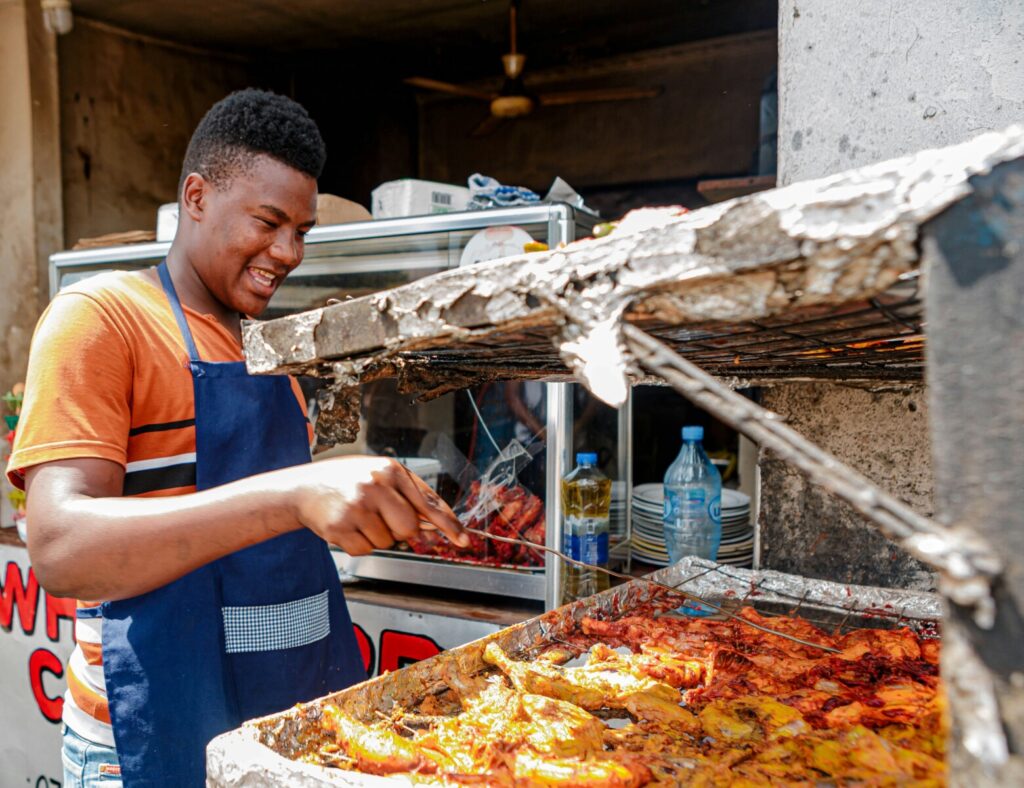
Groundnut soup: peanut soup
Groundnut soup, or peanut soup, is one of the most comforting dishes in Ghanaian gastronomy. It is prepared with peanut paste, tomato, onion, spices and, in many cases, chicken, meat or fish.
It is a thick, creamy soup full of flavour, usually served with fufu, rice or dough balls. Its texture and intensity make it a very complete meal, ideal for those who want to try something traditional but pleasant to the palate.
Peanuts are a widely used ingredient in several African cuisines, and in Ghana they play an important role in many local recipes. This soup is a good example of how simple ingredients can be transformed into dishes full of personality.
Light soup: a light soup, but full of flavour
Light soup is another traditional Ghanaian soup. Unlike groundnut soup, it has a lighter texture, although its flavour is still intense thanks to the use of tomato, onion, spices, chilli and meat or fish.
It is usually served with fufu and is very common in family or local meals. Despite its name, it can have a spicy touch, so it is worth asking beforehand if you are not used to spicy food.
During a volunteer experience, this type of dish allows you to discover Ghana’s more homemade cuisine. These are recipes prepared with patience and often shared in moments of togetherness.
Kenkey: a very popular traditional food
Kenkey is a traditional food made from fermented corn. It is usually wrapped in corn husks or banana leaves and cooked until it forms a firm dough.
It is usually served with fried fish, spicy tomato sauce or shito, a very well-known Ghanaian sauce made with chilli, oil, spices and, sometimes, dried fish or shrimp.
Kenkey is especially popular in coastal and urban areas. Its fermented flavour may be different for those who are not used to it, but it is one of those dishes that reflects the country’s culinary identity very well.
Trying kenkey during your volunteering experience is also a way to understand the importance of corn in Ghana’s traditional diet.
Tilapia: fresh fish and very present in local cuisine
Tilapia is one of the most consumed fish in Ghana. It can be found grilled, fried or served with banku, rice, salad or spicy sauces.
In many parts of the country, especially near rivers, lakes or coastal areas, fish plays a major role in the daily diet. Tilapia is usually prepared with spices and served whole, which can be a different experience for some volunteers.
It is a highly recommended dish for those who enjoy fish and want to try a typical, tasty and fairly common meal in local restaurants.
Shito: the spicy sauce that accompanies many dishes
Shito is not a main dish, but it deserves a special mention. It is a dark and spicy sauce typical of Ghana, made with oil, chilli, onion, garlic, ginger and, in many versions, dried fish or shrimp.
It is used as an accompaniment for rice, waakye, kenkey, fish, meat or even snacks. Its flavour is intense, salty, spicy and aromatic.
If you are not used to spicy food, it is best to try a small amount at first. But for many people, shito becomes one of the most characteristic flavours of the trip.
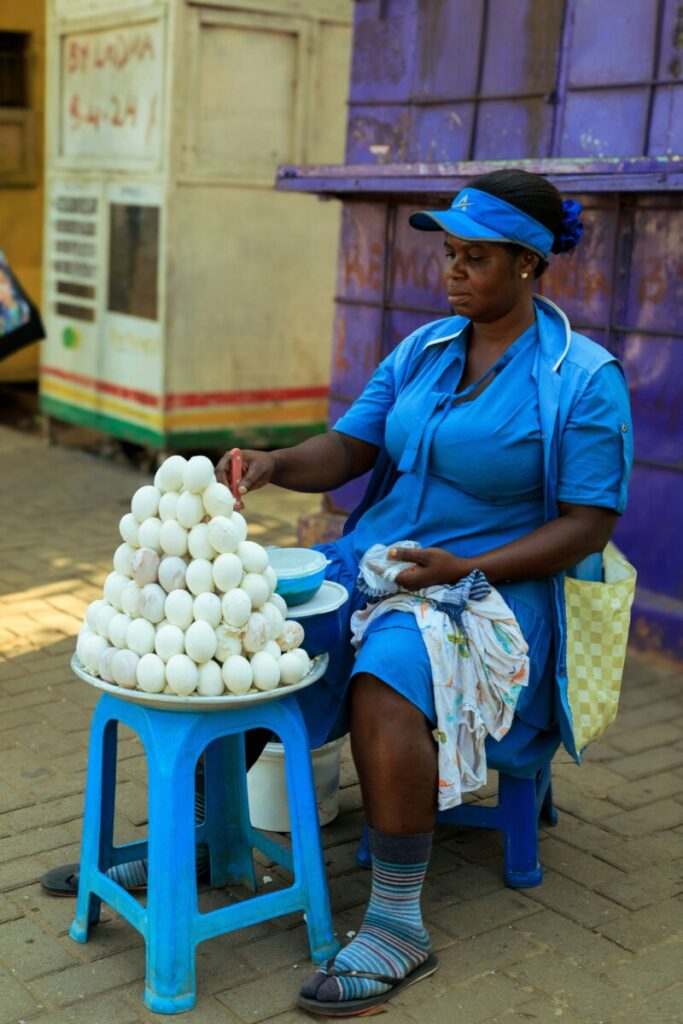
What you can expect from food during your volunteering experience in Ghana
During your volunteer experience, meals may vary depending on the accommodation, the area of the country and the type of programme. In general, local food is usually homemade, simple and based on fresh, basic ingredients.
It is common to find dishes with rice, legumes, vegetables, chicken, fish, eggs, pasta, plantain, cassava or corn. Some meals may be spicier than we are used to, but it is usually possible to adapt little by little.
It is also important to travel with an open mind. Not all dishes will have the flavours, textures or presentations that we know, but that is precisely part of the experience. Trying the local gastronomy is a way to respect the culture, integrate better and live the volunteering experience in a more complete way.
Tips to enjoy local gastronomy
If you are going to travel to Ghana as a volunteer, these tips can help you enjoy the food more during your stay:
Try local dishes with curiosity and without prejudice. Some flavours may surprise you at first, but many volunteers end up discovering new favourite dishes.
Always ask if a meal is spicy, especially if you are not used to it. In Ghana, many spices are used and some sauces can be quite intense.
Respect local customs. In some contexts, it is common to eat with your hands, especially dishes such as fufu or banku. If you have doubts, observe how local people do it or ask naturally.
Stay well hydrated, especially if you travel during hot periods or take part in outdoor activities within the programme.
Be patient during the first few days. Your body may need a short period of adaptation to the new ingredients, schedules and ways of cooking.
Eating in Ghana: an essential part of the cultural experience
Ghanaian gastronomy is a gateway to the country’s culture. Through its dishes, you will discover the importance of community, tradition and hospitality. Eating in Ghana is not just about feeding yourself: it is about sharing, talking, learning and becoming part of daily life.
During your volunteering experience, every meal can become a memory. It may be the first jollof rice you try with your fellow volunteers, a local dinner after a day at the project, a plate of waakye in a market or a traditional soup shared with a host family.
Travelling as a volunteer means stepping out of your comfort zone, and food is part of that process. Trying new flavours, adapting to new customs and appreciating local cuisine will help you experience Ghana in a more authentic and closer way.
Because a volunteering experience is not only lived in the project. It is also lived in the streets, in the markets, in conversations, in shared meals and in all those small moments that connect you with the country and its people.
Ghana awaits you with a vibrant culture, welcoming communities and a gastronomy full of flavour. And, without a doubt, trying its typical dishes will be one of the best ways to remember your trip.