



Menu Apply
University volunteer abroad programs are structured international placements designed specifically for colleges and universities seeking academically aligned, ethical, and professionally managed global engagement opportunities. These programs are not casual volunteer trips or short-term volunteer tourism experiences. They are built to support institutional objectives, service learning frameworks, and long-term community partnerships.
Our Approach
At Volunteer Abroad Cooperating, we work directly with universities and colleges to deliver academically focused volunteer abroad programs across multiple regions worldwide. Each program is designed to balance academic value, student safety, and responsible community impact. Students gain supervised, field-based experience. Institutions meet global engagement and service learning requirements. Host communities receive consistent, ethical support aligned with locally defined priorities.
All university volunteer abroad programs are structured to align with academic calendars, credit requirements, and institutional governance standards. This alignment is essential. It is one of the primary reasons universities choose structured academic volunteer abroad programs over informal or unregulated alternatives.
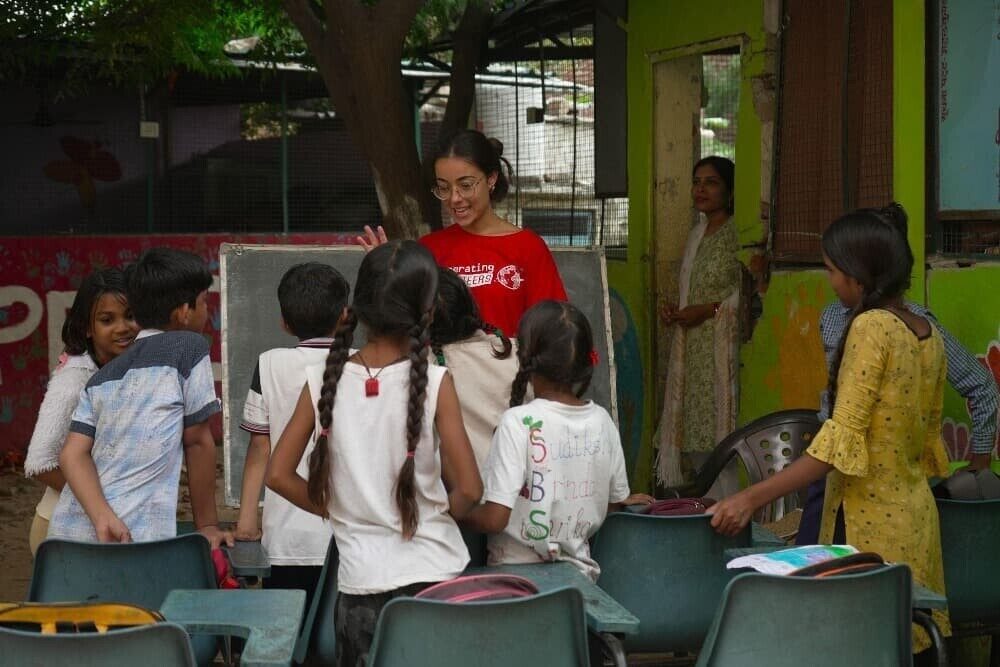
University partnerships worldwide
Target Audience
These university volunteer abroad programs are designed for academic institutions and decision-makers responsible for global engagement, service learning, and study abroad initiatives. This includes study abroad offices, global engagement teams, faculty coordinators, and academic departments seeking structured international programs that align with institutional policies, academic standards, and risk management requirements.

Global engagement teams managing international programs

Academic departments seeking structured programs

Administrators responsible for international initiatives

Disciplines requiring field-based learning
Programs are not designed for independent travelers or informal volunteer participation. They are intended for universities that require academic alignment, supervision, documentation, and ethical oversight as part of institutional approval and governance processes.
Our Approach
Universities are not seeking adventure-based travel experiences. They require reliability, accountability, and measurable outcomes that support their academic mission.
Effective university volunteer abroad programs align with institutional learning objectives and service learning outcomes. Placements are mapped to academic frameworks, faculty expectations, and assessment requirements. Programs support coursework, reflection, and evaluation without competing with academic priorities.
Student safety remains a central concern for universities. Structured programs include vetted placements, trained local coordinators, and defined supervision protocols. Clear escalation and communication procedures are established before participants arrive. Institutions require assurance that duty of care obligations are met consistently.
All placements are hosted by established local organizations, including schools, clinics, environmental initiatives, and community-based nonprofits. Volunteers support existing programs rather than replacing local workers or creating parallel systems. This approach strengthens sustainability, accountability, and community trust.
Universities require clear answers to risk-related considerations. Programs address communication channels, decision-making authority, emergency procedures, and responsibility frameworks in advance. This clarity supports institutional compliance and internal approval processes.
Universities require documentation for internal review, accreditation, and program evaluation. Structured reporting includes participation summaries, learning outcomes, and community impact feedback. Documentation is practical, standardized, and aligned with institutional reporting needs.
Key Differences
University volunteer abroad programs differ significantly from informal volunteer trips or volunteer tourism experiences. Structured university programs are designed to meet academic, ethical, and institutional standards, while informal trips often lack oversight and accountability.
Key differences include:
Common limitations:
Universities typically select structured university volunteer abroad programs to ensure compliance, student safety, and measurable educational outcomes.
Program Options
University volunteer abroad programs vary based on academic structure, scheduling, and departmental objectives. Programs are designed to support diverse institutional models.
Faculty-led programs allow academic departments to retain instructional oversight while outsourcing logistics and local coordination. Faculty manage the academic component, while placements, accommodation, and on-site support are professionally administered. These programs are well suited for focused academic themes and cohort-based participation.
Credit-bearing university volunteer abroad programs are structured around defined learning outcomes and assessment criteria. Students complete supervised fieldwork, reflective assignments, and academic evaluations. This model is commonly used by institutions integrating international service learning into degree pathways.
Cohort-based programs place students from the same institution together. This structure supports peer learning, simplifies administration, and enhances supervision. Group placements are particularly effective for universities managing multiple participants concurrently.
Short-term academic volunteer abroad programs operate during scheduled academic breaks. These programs offer intensive engagement opportunities without disrupting semester coursework and are often coordinated through global engagement or study abroad offices.
Programs may be customized for specific disciplines, including public health, education, environmental studies, social work, and international development. Customization ensures placements align with academic competencies, professional standards, and departmental outcomes.
Global Impact
University volunteer abroad programs operate across diverse geographic regions, with placements developed around verified community needs and partner capacity. Programs commonly support universities in the United States, United Kingdom, Europe, and Australia, with placements hosted across Africa, Asia, Latin America, and selected European destinations.
Programs support schools, early childhood centers, and youth initiatives through classroom assistance, literacy programs, and educational support roles.
Placements focus on health education, outreach initiatives, and support roles alongside local health professionals. Volunteers assist with awareness activities rather than clinical decision-making.
Environmental volunteer abroad programs emphasize conservation education, habitat support, sustainability initiatives, and community-based environmental projects.
Programs support vocational training, education access, and community development initiatives that promote economic participation and social inclusion for women.
Placements address local social challenges through structured collaboration with community organizations and nonprofit partners.
Our Process
The partnership process is designed to be transparent, predictable, and aligned with institutional expectations.
Each partnership begins with a structured review of academic goals, risk considerations, timelines, and administrative requirements. Alignment is confirmed before program development proceeds.
Programs are designed around academic calendars, group size, field of study, and institutional policies. Customization ensures compatibility with faculty oversight and administrative processes.
Students and faculty receive guidance on cultural context, program expectations, safety procedures, and logistical planning. Pre-departure preparation supports readiness and risk mitigation.
Local teams manage placements, accommodation coordination, and daily support. Universities are not required to resolve operational issues remotely. On-site oversight ensures consistency and accountability.
Universities receive post-program documentation to support assessment, compliance, and internal review. Reporting prioritizes clarity, accuracy, and institutional usability.
Success Stories
University partnerships are built on consistent delivery rather than promotional claims.
A mid-sized European university partnered on a short-term service learning program focused on education and community development. Students supported classroom activities while completing academic reflection requirements. Institutional feedback highlighted strong supervision and structured coordination.
A faculty-led cohort from a North American college participated in a summer environmental program. The department cited reliable local partnerships, clear communication, and effective logistics as key factors in continuing the collaboration.
Testimonials are presented as composite summaries to protect institutional privacy and ensure realistic expectations.
Our Standards
Ethical practice underpins all university volunteer abroad programs.
Programs are designed to strengthen local systems rather than disrupt them. Volunteers support defined roles that complement existing services.
Volunteers are not placed in positions that replace paid local workers. Program design prioritizes economic responsibility and community benefit.
Programs involving children follow safeguarding standards aligned with international best practices. Access is supervised and role-appropriate at all times.
Clear policies, communication structures, and local oversight are established before program implementation. Risk management is proactive and documented.
Participants receive guidance on appropriate insurance coverage and have access to local support throughout the program duration.
Ethical and safeguarding standards are foundational requirements for university programs.
Universities evaluating volunteer abroad programs often require clear documentation before internal approval.
For study abroad and global engagement offices
For faculty coordinators and academic departments
For internal assessment, risk review, and approval
These materials are designed to support informed decision-making, whether programs are in early planning stages or ready for implementation. There is no obligation to proceed.
Have Questions?
University volunteer abroad programs are structured international placements designed for colleges and universities to meet academic, service learning, and global engagement objectives through supervised and ethical community partnerships.
Yes. Programs are designed to align with institutional learning outcomes, service learning frameworks, and faculty requirements established during program development.
In most cases, yes. Faculty-led university volunteer abroad programs are customized to align with departmental goals, academic schedules, and instructional needs.
Yes. Post-program documentation is provided to support institutional reporting, evaluation, and compliance requirements.
| Address: | New York, United States |
| Address: | Avinguda Carrilet, 3, Edifici D, planta 2a, 08902 L’Hospitalet de Llobregat (Barcelona) |
| Phone: | +34 931 890 904 - Office- Barcelona |
| Email: | hello@cooperatingvolunteers.com |
| WhatsApp: | +34 671 94 28 89 |

Cooperating Volunteers, S.L. All rights reserved © 2014
Leave us your information and we will contact you within the next 24 hours
Our volunteers will be able to validate university credits with the aim of traveling in a more responsible and economical way.
What does volunteering focused on university practices involve?
At Cooperating Volunteers, we make agreements with different universities to validate university credits with the aim of traveling in a more responsible and economical way.
The specialties we work with are extensive: medical volunteering, nursing, education, social work, psychology, physiotherapy, engineering, architecture…
The practices can be carried out in our designated destinations for this purpose, as well as in Spain.
If you choose an international destination, it’s a unique way to live an unforgettable and enriching experience, as you will have the opportunity to continue your education in another country, with a completely different culture.
Stepping out of our comfort zone and being part of the various projects at the destination will allow us to grow both personally and professionally, creating a more extensive curriculum.
And we are fully convinced that this experience will accompany you throughout your life.
You will be able to visit hospitals, schools, centers, orphanages, and participate directly and actively in the daily lives of all those people at the destination, always accompanied by other professionals willing to collaborate hand in hand with you and guide you in daily tasks.
If your university is not part of the agreement with Cooperating Volunteers, you can contact cristina@cooperatingvolunteers.com so that we can get in touch and make this experience a reality.
Corporate volunteering consists of tailored programs for your company, designed to develop teamwork skills.
It is proven that teamwork directly impacts productivity.
Collective effort surpasses individual capabilities, promotes diversity of skills, stimulates creativity, and facilitates problem-solving in the face of various challenges.
Therefore, it not only maximizes efficiency but also enriches the work environment.
We conduct corporate volunteering programs that consist of customized programs for your company, designed to develop teamwork skills, improve performance, and foster unity among employees.
We tailor projects to the corporate identity and size of the company, and we can adjust them to any destination and time of the year.
The advantages of corporate volunteering include:
The future is aligned with a more responsible society, and participating in social projects positions our company among the list of revolutionary businesses that want to be part of the change.
If you resonate with this message, corporate volunteering is a unique experience both individually and collectively, and at Cooperating Volunteers, we accompany you throughout the process to make it a unique journey.
Quality time spent with family strengthens emotional bonds, promotes communication, and contributes to the emotional well-being of its members.
Spending quality time with family and being able to disconnect from our hectic routines is not only enriching but also necessary.
Sometimes we forget to communicate, connect, and dedicate time to each other. Each one of us lives focused on our jobs, schools… And it’s necessary to find the opportunity to pause and take care of ourselves.
Quality time spent with family strengthens emotional bonds, promotes communication, and contributes to the emotional well-being of its members. And of course, it creates lifelong positive memories.
At Cooperating Volunteers, we suggest moving away from those ‘more superficial’ trips (which can also be fantastic), but we invite you to live this experience to bring out our most empathetic and humanitarian side.
Family volunteering gives us the opportunity to be part of a positive impact, promoting values of solidarity and social responsibility.
There are many families who choose to experience these trips focused on cooperation and direct involvement with different communities around the world, where living conditions are very different and sometimes entirely precarious.
Projects are tailored to different ages, allowing us to work together.
An incredible way to fill our suitcase with memories, learning, and knowledge.
And although stepping out of our comfort zone often feels daunting, we assure you firsthand that it’s worth it.
At Cooperating Volunteers, we accompany you throughout the entire experience, from start to finish, to make it unforgettable.
At Cooperating Volunteers, we believe it’s never too late for anything, especially for volunteering and living a unique and unforgettable experience.
There are many people, increasingly so, who opt for responsible travel that involves social work.
Accustomed to organized and mostly touristic trips, at Cooperating Volunteers, we want to advocate for a more enriching experience, one that transforms us from within and allows us to be part of the change the world needs to see.
We can adapt both the destination and the duration of our projects to fit your needs.
It’s an opportunity full of emotions that allows us to significantly contribute to different communities and their evolution. And you can participate in different areas such as education, social support, or assistance in different centers.
Some of the benefits include:
Living this experience will undoubtedly be a before and after.
A volunteering initiative with leadership and impact through the educational action program.
When we talk about social volunteering, we refer to all those actions and activities carried out altruistically, selflessly, and with the aim of addressing multiple problems and needs of different communities, always focused on education and self-sufficiency.
Education is essential because it provides the tools and knowledge necessary for personal, social, and economic development.
Our goal is to create self-sufficient communities and provide opportunities for the future personal development of each member. The message is not to ‘give’, but to accompany in the process of training for self-managed provision.
At Cooperating Volunteers, many of our destinations and projects embrace this type of volunteering. Some of our projects include: community programs, education, women’s empowerment…
And although they are completely different from each other, they share a single objective: progress towards a society that can embrace us all in the same way.
If you are someone who is restless, who needs to see a change in the future, volunteering is an experience tailor-made for you.